Introduction
Finding comfortable furniture for a small room can be challenging. You need enough seating for everyday life, but you may also want somewhere for friends or family to sleep when they stay overnight.
A conventional bed takes up valuable floor space, while a full-sized sofa bed may feel too bulky for a compact flat, home office or spare room.
This is where chair beds offer a practical solution.
A chair bed provides comfortable seating during the day and converts into a single sleeping space when required. Its compact design makes it particularly useful in UK homes where every square metre needs to work harder.
However, choosing the right chair bed involves more than finding a design that looks attractive. You need to consider its dimensions, sleeping comfort, conversion mechanism and the amount of space it requires when fully extended.
In this guide, we will explain how to choose the best chair bed for a small room and which features matter most when space is limited.
Why Are Chair Beds Ideal for Small Spaces?
Chair beds are designed to provide two useful functions within one compact piece of furniture.
During the day, they can be used as:
- An everyday armchair
- A reading chair
- Extra living-room seating
- A comfortable office chair
- A relaxing seat in a bedroom
At night, the same furniture converts into a single bed for one person.
This dual-purpose design helps homeowners avoid filling a room with furniture that is only used occasionally.
A chair bed is normally narrower than a sofa bed and requires less floor space in its seating position. This makes it easier to place in corners, box rooms and other areas where a traditional sofa would not fit comfortably.
Which Rooms Are Suitable for a Chair Bed?
Chair beds can work in almost any room, but they are especially valuable in spaces that need to perform more than one function.
Small Living Rooms
A compact chair bed can provide an additional seat without making a small living room feel overcrowded.
When someone stays overnight, it can be converted into a convenient guest bed without requiring a separate bedroom.
Home Offices
Many UK homeowners now use spare bedrooms as permanent workspaces.
Placing a large bed in the room can reduce the space available for a desk, storage and office equipment. A chair bed keeps the room open and professional during working hours while allowing it to become a guest room when necessary.
Studio Flats
In a studio flat, seating and sleeping areas often share the same space.
A chair bed can help create a clearer distinction between daytime and nighttime use, particularly when a permanent bed would dominate the room.
Children’s and Teenagers’ Bedrooms
A single chair bed can provide a comfortable place to sit, read or play games. It can also become an extra bed when a friend stays overnight.
Guest Rooms
A guest room does not always need a permanent bed.
Using a chair bed allows the room to remain available for hobbies, exercise, storage or work when no guests are staying.
Student Accommodation
Student rooms are often compact and need to accommodate sleeping, studying and relaxing.
A chair bed provides extra seating and occasional sleeping space without requiring several separate pieces of furniture.
How to Measure a Small Room for a Chair Bed
Correct measurements are essential when choosing a chair bed for a small space.
You need to measure the furniture in both its chair and bed positions.
Measure the Available Width
Start by measuring the width of the area where the chair bed will normally sit.
Remember to account for:
- Skirting boards
- Radiators
- Plug sockets
- Window sills
- Nearby cabinets
- Doors opening into the room
Do not assume that the full wall width is usable.
Check the Extended Length
A chair bed becomes considerably longer when converted for sleeping.
Compare the fully extended length with the available floor space. Make sure it will not block the bedroom door, prevent access to storage or press against other furniture.
Allow Space for Movement
The chair bed may technically fit without leaving enough room to use it comfortably.
Whenever possible, leave a clear route around the extended bed so the sleeper can enter and leave the room safely.
Measure Doorways and Stairs
The chair bed must also reach its intended room.
Measure:
- Front and internal doorways
- Hallway widths
- Staircases and landings
- Tight corners
- Lift dimensions in flats
Checking the packaged dimensions before ordering can help prevent delivery problems.
Important Chair Bed Measurements
| Measurement | Why It Matters |
|---|---|
| Chair width | Determines whether it fits in the intended position |
| Chair depth | Shows how far it projects into the room |
| Chair height | Important when placing it beneath windows or shelves |
| Extended bed length | Confirms there is enough sleeping space |
| Sleeping width | Indicates how much room the sleeper will have |
| Clearance required | Allows safe and convenient conversion |
| Packaged dimensions | Helps confirm access through doors and stairways |
Never rely on photographs alone. Always check the manufacturer’s exact product specifications because dimensions vary between models.
What Features Should You Look For?
The best chair beds for small spaces combine compact dimensions with reliable sleeping support.
Supportive Mattress or Cushioning
A chair bed must remain comfortable in both positions.
Look for sleeping surfaces made with:
- High-density foam
- Multi-layer cushioning
- Resilient padding
- Evenly supported sections
Thin foam may feel comfortable for a short time but can compress more quickly with frequent use.
If the chair bed will be used regularly, mattress quality should be one of your main priorities.
Strong Frame
A durable frame supports the user and helps the chair bed retain its shape.
Depending on the design, quality models may use:
- Reinforced metal frames
- Solid wooden structures
- Strong joints and hinges
- Stable supporting legs
Check the stated maximum weight capacity before purchasing, particularly when the bed will be used by an adult.
Easy Conversion Mechanism
A chair bed for a small room should be easy to open without requiring complicated movements.
Common mechanisms include:
- Fold-out designs
- Pull-out systems
- Click-clack mechanisms
- Convertible futon-style designs
The best option depends on your room layout and how frequently you intend to use the bed.
For regular conversion, choose a smooth mechanism that can be operated without moving other furniture every time.
Durable Upholstery
Chair beds may experience more movement and handling than standard armchairs.
Choose upholstery that can withstand repeated sitting, folding and sleeping. Suitable options can include polyester, linen blends and other hard-wearing furniture fabrics.
Removable or easy-clean covers are particularly useful in children’s rooms, student accommodation and frequently used guest spaces.
Comfortable Seating Position
Do not focus exclusively on the bed function.
The chair bed is likely to spend most of its time as a seat, so consider:
- Seat height
- Back support
- Cushion firmness
- Armrest position
- Seat depth
A compact chair is only useful if it remains comfortable for normal daytime use.
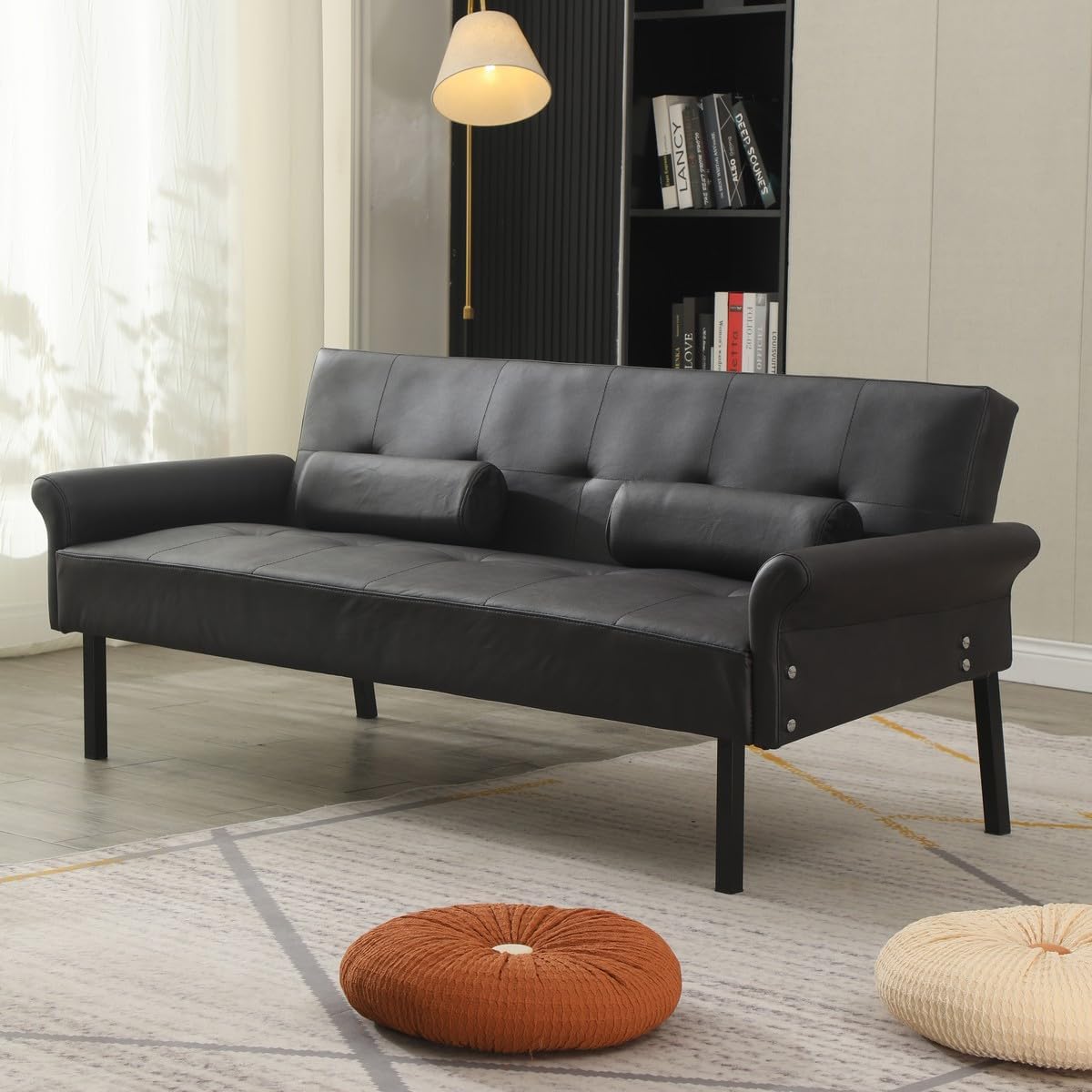
Chair Bed vs Sofa Bed for a Small Room
A chair bed and sofa bed both combine seating with sleeping space, but they suit different room sizes and needs.
| Feature | Chair Bed | Sofa Bed |
|---|---|---|
| Seating capacity | Usually one person | Usually two or more people |
| Sleeping capacity | Normally one person | One or two people |
| Floor-space requirement | Low | Moderate to high |
| Ease of movement | Usually easier | Often heavier |
| Best room type | Box room, office or compact flat | Living room or larger guest room |
| Conversion space | Relatively limited | More space usually required |
| Suitability for narrow areas | Excellent | Depends on the model |
A sofa bed may be better when you need seating or sleeping space for two people. However, a chair bed is normally the more practical choice when your main priority is preserving floor space.
Best Chair Bed Styles for Compact Rooms
Different designs offer different advantages.
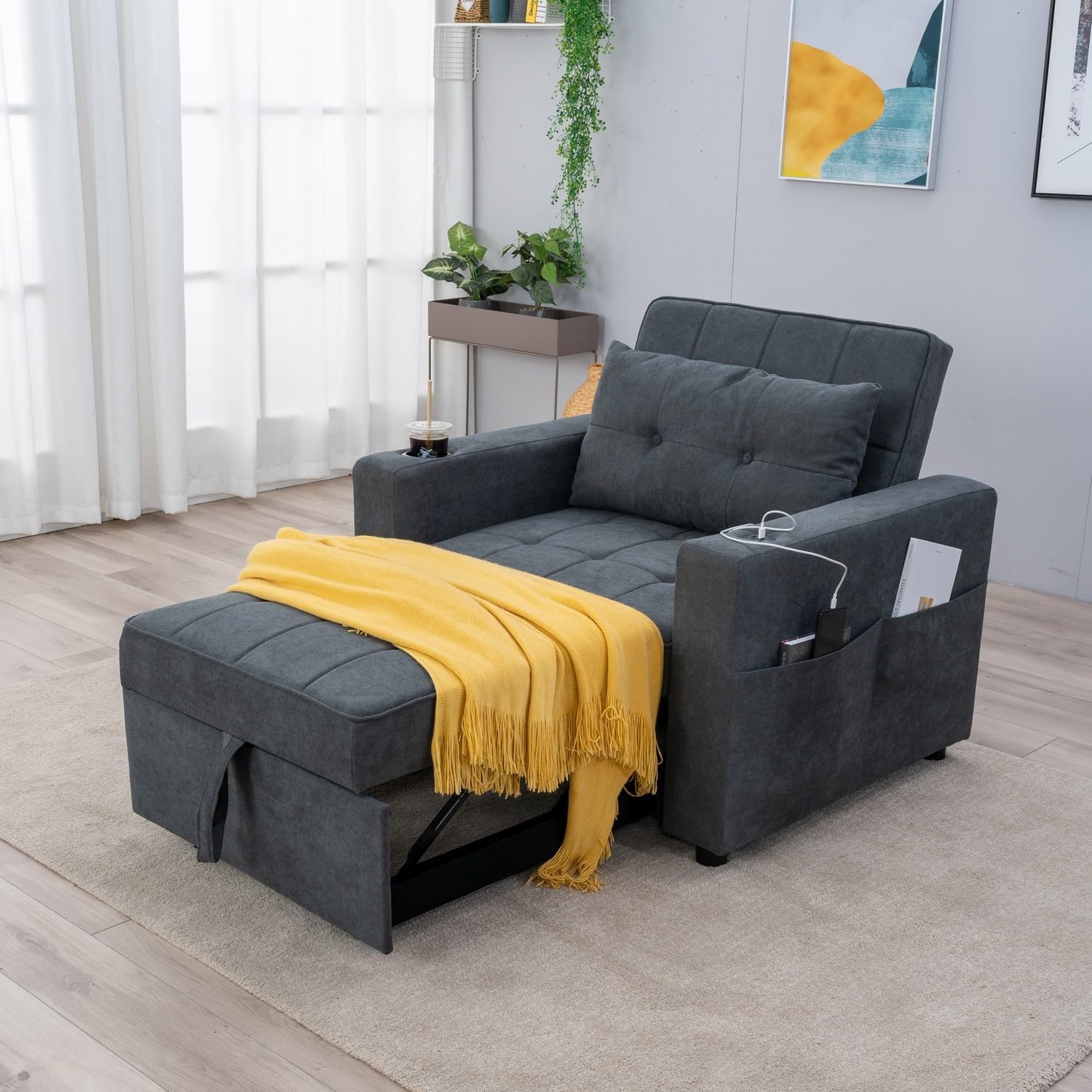
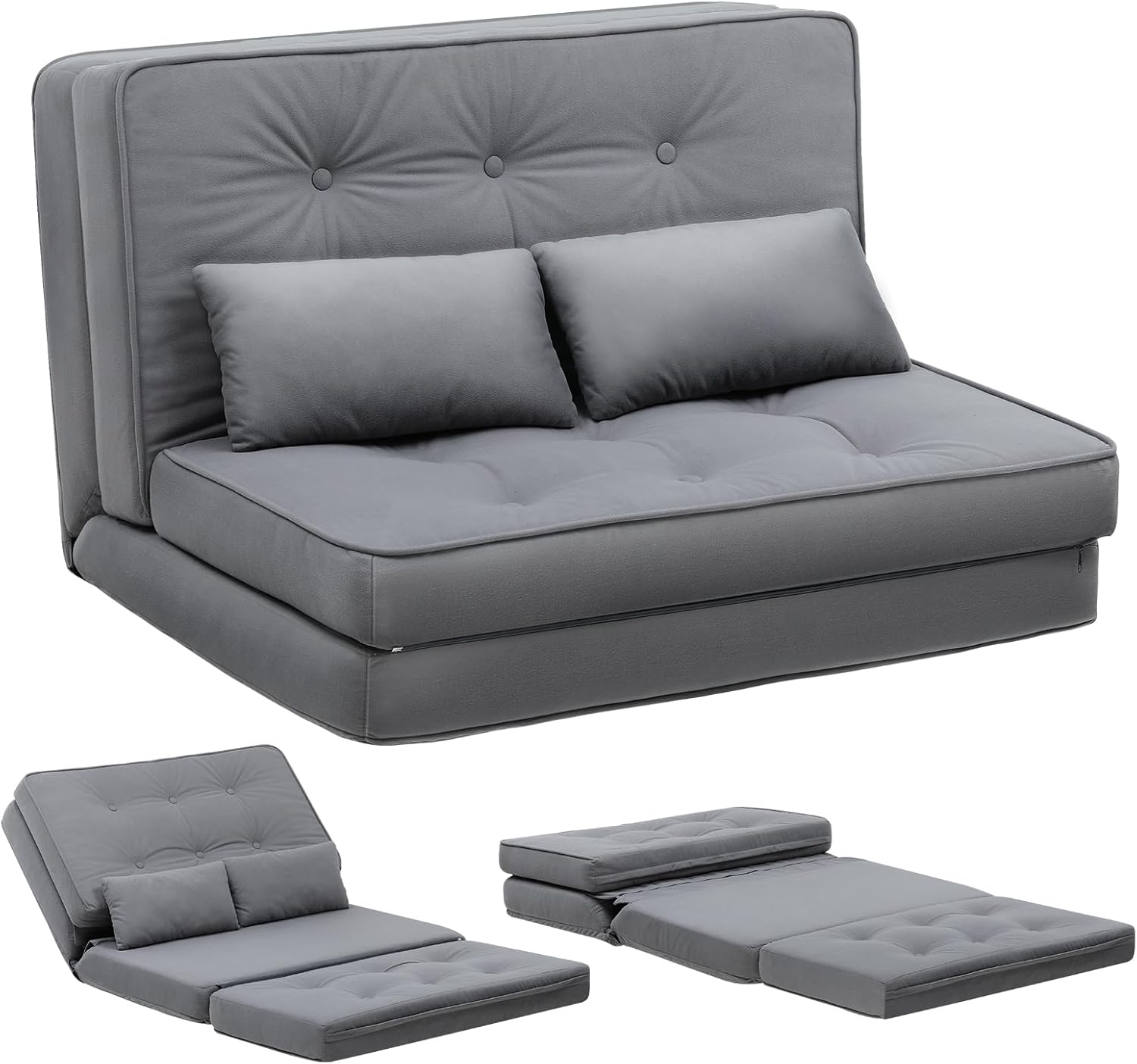
Fold-Out Chair Beds
A fold-out chair bed usually contains connected cushioned sections that unfold onto the floor or a supporting frame.
These models are often simple to operate and work well for occasional guests.
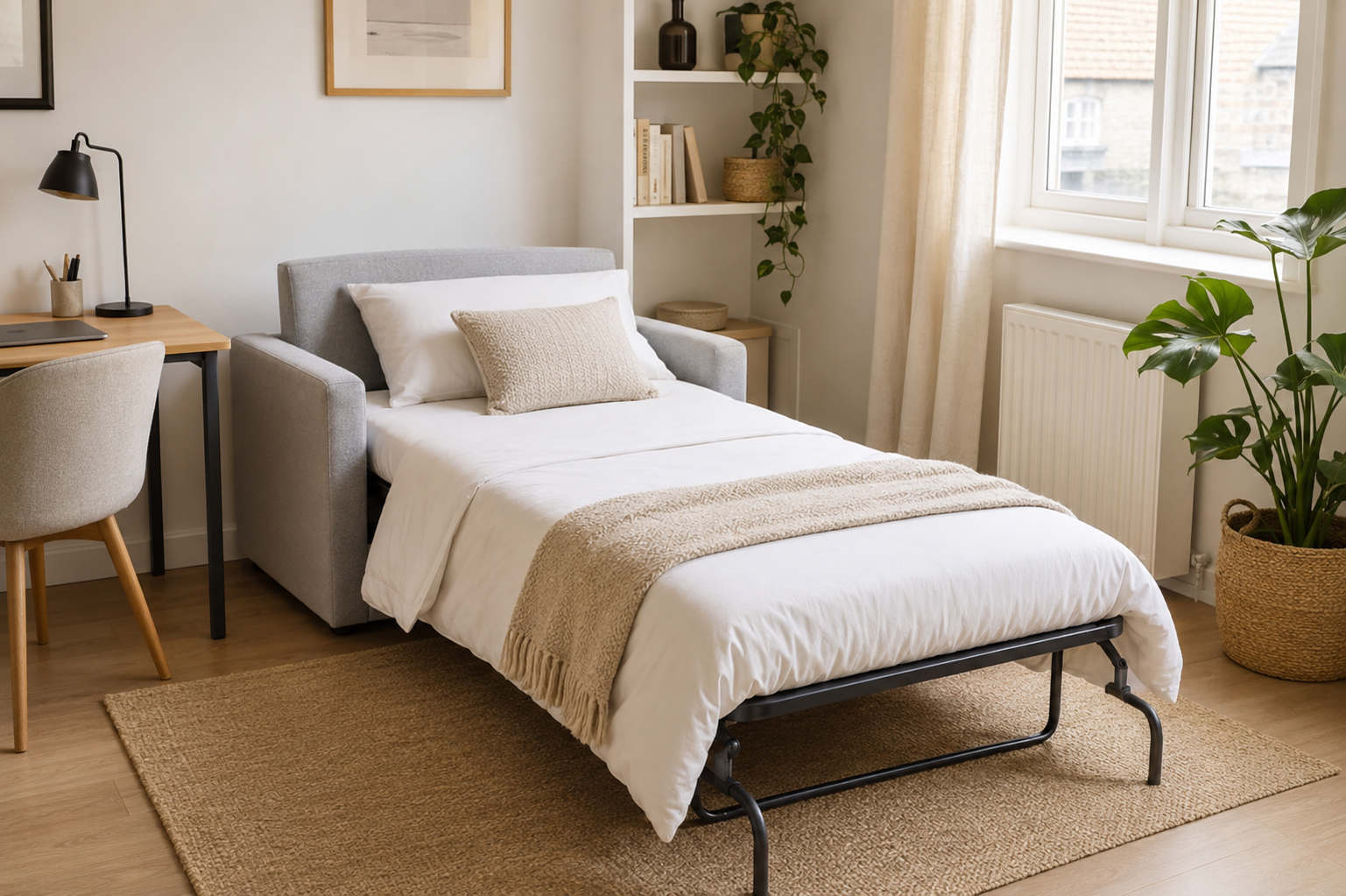
Pull-Out Chair Beds
A pull-out model stores part of the sleeping platform beneath the chair.
This style can create a more structured sleeping surface, although you must leave enough space in front of the chair for the bed to extend.
Single Futon Chair Beds
A single futon chair bed normally uses a simple folding design.
Futon-style models often suit:
- Student bedrooms
- Contemporary interiors
- Informal guest spaces
- Budget-conscious households
Their relatively lightweight construction may also make them easier to reposition.
Armchair Beds
An armchair bed is designed to look more like a conventional upholstered chair.
This can be a good choice for living rooms and formal interiors where appearance is just as important as functionality.
Benefits of Chair Beds for Small Spaces
1. Makes Better Use of Floor Space
A chair bed allows one area to provide both seating and sleeping functionality.
Instead of keeping a full-sized guest bed in a room throughout the year, you can preserve open floor space until the bed is actually needed.
2. Helps Create a Multifunctional Room
A home office can become a guest room, while a reading corner can provide overnight accommodation.
This flexibility is especially useful in smaller UK homes where dedicating an entire room to one purpose may not be practical.
3. Provides a More Permanent Guest Solution
Inflatable mattresses must be inflated, deflated and stored between visits.
A chair bed remains ready for use while also serving a practical purpose every day.
4. Offers Comfortable Extra Seating
Unlike a folding camp bed or spare mattress, a chair bed contributes to the room even when no one is sleeping on it.
5. Available in Different Styles
Modern chair beds are available in various fabrics, colours and shapes.
Popular choices for compact interiors include:
- Light grey
- Charcoal
- Navy
- Cream
- Beige
- Muted green
Neutral colours can help the room feel open, while a stronger colour can turn the chair bed into a focal point.
How to Make a Small Room Feel Larger
Choosing the correct chair bed is important, but its position and surrounding décor can also influence how spacious the room feels.
Place It Against a Wall
Positioning the chair bed against a wall keeps the central floor area open and makes movement easier.
Before settling on a position, confirm that the bed can still extend fully.
Choose Proportionate Furniture
Avoid combining a compact chair bed with oversized tables, cabinets or desks.
Furniture of a similar scale creates a more balanced layout.
Use Light Colours
Light upholstery can reflect more light and may help a compact room feel less enclosed.
Dark colours can still work well, particularly when balanced with pale walls and suitable lighting.
Keep the Conversion Area Clear
Avoid placing heavy furniture directly in front of the chair bed.
A clear conversion area allows you to unfold it quickly without reorganising the entire room.
Use Vertical Storage
Shelves and wall-mounted storage can free up valuable floor space while keeping essential items accessible.
Common Mistakes to Avoid
Measuring Only the Chair Position
A chair bed that fits perfectly when folded may block the entire room when extended.
Always check both sets of dimensions.
Ignoring the Intended Sleeper
Consider the height, weight and comfort requirements of the person who will use the bed.
A design suitable for a child may not provide the dimensions or support required by an adult.
Choosing Appearance Over Comfort
Colour and style matter, but they should not replace proper cushioning, frame strength and sleeping support.
Buying Without Checking Access
A chair bed may fit inside the room but still be too large to pass through a narrow doorway or staircase.
Check packaged measurements as well as assembled dimensions.
Forgetting About Daily Practicality
If the bed will be opened frequently, a difficult mechanism can quickly become frustrating.
Choose a design that matches how often it will be converted.
Selecting the Cheapest Option
A low price can be attractive, but poor-quality foam or a weak frame may reduce comfort and shorten the product’s usable life.
Assess overall value rather than purchase price alone.
How Much Space Does a Chair Bed Need?
The exact amount of space depends on the model.
In chair mode, it may occupy a similar footprint to a compact armchair. When extended, it will usually require enough length for a single adult to lie down.
You should also allow room to:
- Operate the mechanism
- Extend supporting sections or legs
- Add bedding
- Walk around the sleeping area
- Access the room safely
Always follow the dimensions listed for the specific model rather than assuming every chair bed has a standard size.
Is a Chair Bed Suitable for Adult Guests?
Yes, many chair beds are designed to accommodate adults. However, suitability depends on the model’s dimensions, weight capacity, frame and sleeping surface.
For adult guests, prioritise:
- Adequate sleeping length
- A clearly stated weight capacity
- Supportive foam or cushioning
- A stable frame
- An even sleeping surface
If the chair bed will be used frequently, selecting a higher-quality design can provide better long-term comfort and durability.
Final Thoughts
Choosing the best chair bed for a small room requires a balance between compact dimensions, everyday comfort and sleeping support.
Start by measuring the entire room and checking how much space the bed will require when fully extended. Then compare the mattress or cushioning, frame construction, weight capacity, upholstery and conversion mechanism.
A well-chosen chair bed can transform an underused corner, home office or box room into a flexible guest space without permanently sacrificing valuable floor area.
For UK homeowners dealing with limited space, chair beds provide a practical way to combine comfortable seating and convenient overnight accommodation within one versatile piece of furniture.
Frequently Asked Questions
1. Are chair beds good for small rooms?
Yes. Chair beds are particularly suitable for small rooms because they combine a single seat and guest bed within one compact piece of furniture.
2. How do I measure a room for a chair bed?
Measure the available width and depth in chair mode, followed by the complete length and width required when the bed is extended. Remember to include clearance for doors, furniture and walking space.
3. Can an adult sleep on a chair bed?
Many chair beds are suitable for adults, provided they offer adequate dimensions, supportive cushioning, a durable frame and an appropriate weight capacity.
4. Is a chair bed smaller than a sofa bed?
A chair bed is generally narrower and more compact than a sofa bed. It normally seats and sleeps one person, making it particularly useful in box rooms, offices and small flats.
5. What is the best type of chair bed for a small room?
The best type depends on the available space and intended usage. Fold-out and single futon chair beds can work well in very compact rooms, while upholstered armchair beds may be better for living areas where appearance is important.
6. Can a chair bed be used in a home office?
Yes. A chair bed allows a home office to provide comfortable daytime seating and convert into a guest bedroom whenever required.
7. Do chair beds come in a standard size?
No. Chair bed dimensions vary between manufacturers and models. Always check the exact folded, extended and packaged measurements before ordering.